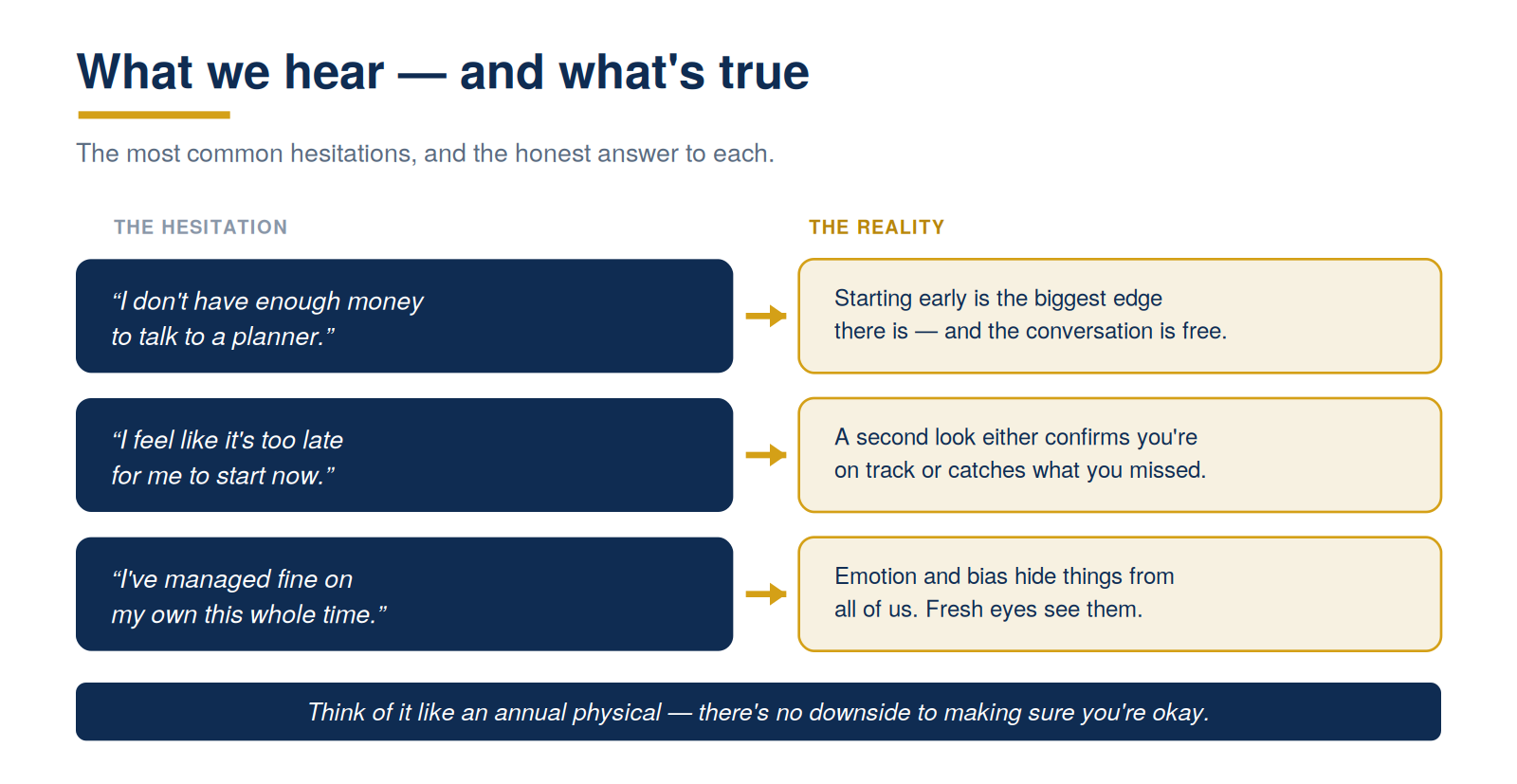

Most people who come to us aren’t looking for a sales pitch. They’re looking for an answer to one question: am I going to be okay? Can I retire? What does that even look like?
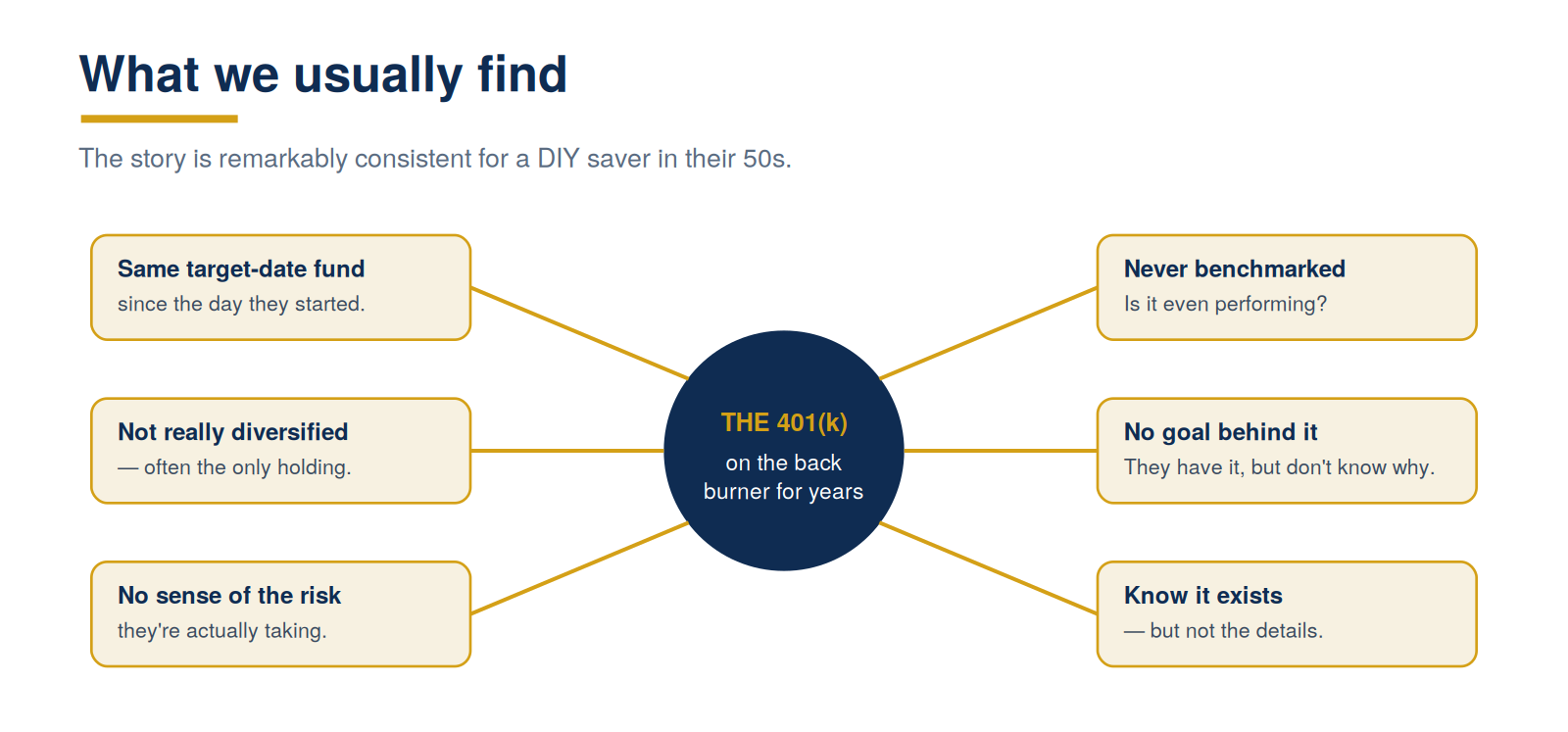
Most people have never sat down and run the numbers. They know what their bills are. They have a rough idea of what’s in the 401(k). But nobody’s ever done the calculations, tested different scenarios, or asked the questions they don’t yet know to ask. That’s what we’re here for.
Whether you’re 28 and just getting started or 58 and five years out, the process is the same. The focus is what changes.
What the first meeting actually looks like
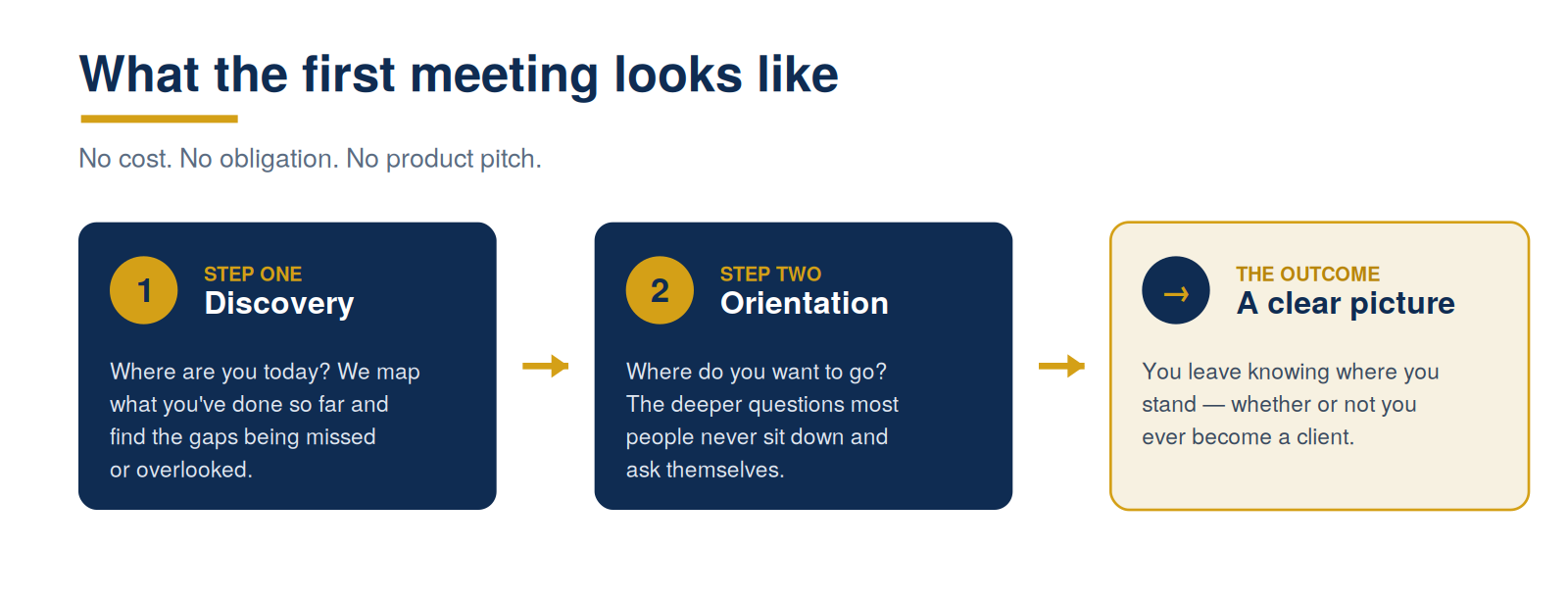
The first meeting is a discovery session. No cost, no obligation, no product pitch. We’re looking at what you’ve done up to this point and where the gaps are — the things being missed or overlooked. You leave with a clearer picture whether or not you ever become a client.
If it’s a fit for both of us, we move into the orientation meeting. This is the one people remember, because most of the questions aren’t ones you think about on a Monday after work:
- What does retirement actually mean to you — stopping completely, or just slowing down?
- What’s important about your money? What are you trying to protect, and who for?
- Is leaving an inheritance important? Do you want the taxes handled so your kids don’t inherit a tax bill along with the money?
Most people have never been asked. Watching a client work through it — and realize what they actually want — is the best part of the job.
The GLB Way
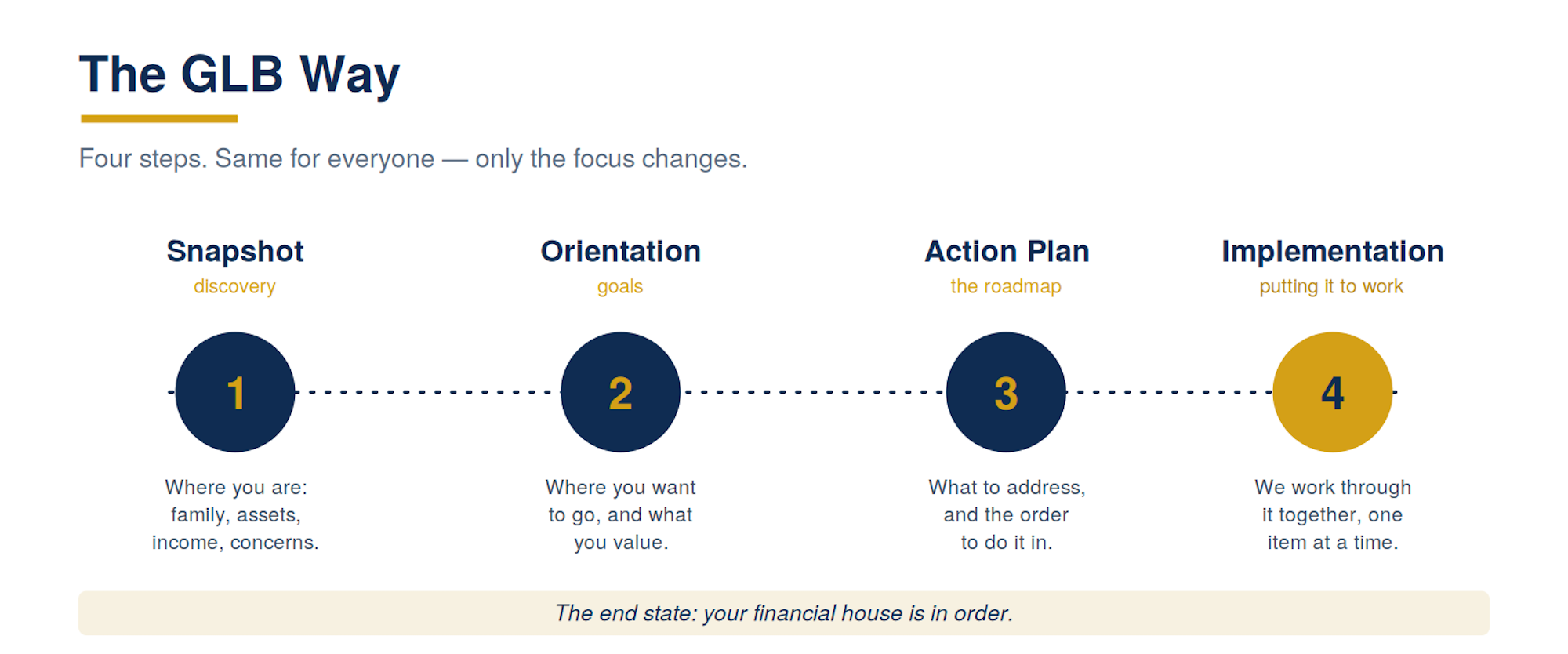
We run a defined, four-step process. It doesn’t change based on your age or your account balance. Only the focus does.
- Snapshot (discovery). We capture where you are today — family, assets, debts, income sources, insurance, beneficiaries, and your top concerns. What interest rate is your house at? What will Social Security pay you at different ages? (Most people have never logged into ssa.gov and pulled the report.) We build a full family makeup too — kids, marriages, grandchildren, and the relationships behind them.
- Orientation (goals). Where do you want to go, and what do you value. This is where the deeper questions live.
- Action Plan. We present the plan, identify what to address, and suggest the order to do it in. This is usually where those early questions pay off — now you see why we asked whether you served on foreign soil (VA long-term care benefits) or whether you have collectibles that never made it onto your homeowner’s policy.
- Implementation. We work through the plan together, one item at a time.
The end state is simple to say and harder to reach on your own: your financial house is in order.
The expense sheet
We don’t call it a budget. We call it an expense sheet, and it’s the key to the whole thing.
Where did your money actually go last year? Most people have an idea. Almost nobody has the real number. Your fixed bills are easy — it’s the variable spending that gets away from you. Gifting to the kids. Spoiling the grandbabies. The $9,000 at restaurants and bars you didn’t realize you spent until you saw it in one column.
That reaction is normal, at every age. And it’s the point. Because when someone asks “can I retire,” we refuse to guess at your retirement income. We need a real number for the life you actually want to live — then we adjust it up or down as your lifestyle changes.
Here’s why the real number matters beyond the shock value. A lot of planners just take the figure a client throws out — “I want $6,000 a month” — and run with it. That can work. But if you’re pulling extra from an IRA and it’s piling up unspent in savings, you’re paying tax on money you didn’t need to withdraw. A real expense number lets us be strategic: which account the income comes from, whether there’s room for Roth conversions, how to keep the whole thing tax-efficient. Retirement planning isn’t one thing. It’s income planning, tax strategy, and estate planning working together.